The Emptying Nest

empty-nest

I’m not at the official empty nest season yet; I still have a couple perched to fly as well as a couple still needing nesting. But many of my birds have, indeed, flown. The season has started.

In 2005, when we left our home in San Pablo to live in El Sobrante, all ten were under the same roof. One birdie flew away for a bit, but came back, bringing a new bird to our family. He nested with the brothers. So for a time, the nest held 11 chicks. The nest was hustling and bustling with all the chicks and their friends.There was constant band playing from the garage, little kids running after chickens in the yard, fighting, bickering, eating, laughing…our last time as a family together. For me those three years were a refuge from the dark times we left. Getting ready for the three holiday seasons we spent there was the funniest part of the year.

“I miss you most of all, my darling(s) when autumn leaves start to fall.”

In 2008, circumstances  caused this nest to be vacated, to be vacated immediately. That was the last time all my birds were together. Two birds moved away from me. I took eight with me to the Peninsula. But eventually, two more would fly away, and for awhile I had six. But the carousel goes round and round, two more would graduate. Then a third. One flew off last year and another moved elsewhere this spring. We are down to four. Two of them are adults, perched. I’m not going to nudge them like a good mother eagle would do.

I don’t know how I did all that. I don’t think I did it (mothering) very well. But I know I loved it, I loved the little kids, the crazy, the boundless energy, the joy in the midst of pain, I loved them. I still do. But I miss them most of all when autumn leaves begin to fall.


As poignant and nostalgic I sometimes get, I have learned these past few years not to fear the future. I have been raising kids for almost thirty years. For thirty years that has been my primary purpose. I can start to see beyond this purpose, and I’m not sure what lies in that territory. But I trust the Lord to guide and provide. Maybe I’ll go back to Europe for a spell before the carousel slows to a stop. Maybe. I don’t seem to fear my fears so much anymore.

“Behold, I will do something new, now it will spring forth; will you not be aware of it?
I will even make a roadway in the wilderness, rivers in the desert.
Isaiah 43:19, NASB

Song of the Green Light

traffic-lights-1013506_960_720

In John Steinbeck’s little classic, “The Pearl”, we meet Kino, a diver of pearls, Juana, his wife,  and Coyotito, their son. The story is about what happens to this little family when Kino finds the Pearl of the World. One aspect I found interesting about this story is how music wove its way into Kino’s daily activities.

Kino heard the little splash of morning waves on the beach. It was very good- Kino closed his eyes again to listen to his music. Perhaps he
alone did this and perhaps all of his people did it. His people had
once been great makers of songs so that everything they saw or thought or did or heard became a song. That was very long ago. The songs remained; Kino knew them, but no new songs were added. That does not mean that there were no personal songs. In Kino’s head there was a song now, clear and soft, and if he had been able to speak of it, he would have called it the Song of the Family. 

There were other songs in Kino’s story: the Song of Evil when little Coyotito was stung by a scorpion and the Song of the Enemy when the racist doctor only served them when he found out about the Pearl. Then there was the Song of the Pearl That Might Be which became the Song of the Pearl That Was, which, unfortunately, did not end well. Everyone should read this little classic and realize that racism is not confined to our time, nor our borders, nor our people.

On a lighter note…there’s a street in San Francisco called Geary Boulevard. My grandmother lived off Geary and I lived, for a couple years, on 39th & Anza which is a short jaunt from Geary. Gordo’s is on Geary and that’s the main reason I still go there often.  I remember taking the 38X downtown in those days, and was amazed how fast I could get to work from the outskirts of the City. Especially when you hit every green light. For awhile, earlier this year, my daughter worked downtown at the crack of dawn, and on Sundays, I’d drive her to work. I’d take Geary home. The street was deserted and all you could see was a long line of green lights like soldiers standing at attention. I tried hard to get them all, but, alas, I wasn’t able to.

Like Kino, there are days when all of the tasks I have to do seem to skip to their own beat. Those days when things go as planned, the kids find their shoes, we get out of the door on time, my favorite songs come on the radio and, finally, we hit all the green lights are the days I enjoy the Song of the Green Light. We all have those days. And when you experience its melodies, for the present, all seems right in your world. I am very grateful. It’s easy to be grateful singing the Song of the Green Light.

Learning to be grateful when the Song of the Yellow Light or the Song of the Red Light is playing is more daunting, but doable nonetheless. But my point, today, is to enjoy those serendipitous moments when the melody of your day is sweet and peaceful. Tasks and relationships flow like a well choreographed dance. We know it doesn’t last, but we can drink it up while it’s playing.

I’m not the only one who feels this way. Our old friend, Kawika, penned it nicely in a recent Facebook post:

If your end-of-day story goes something like, grabbed a burger for dinner, caught a couple jigglypuffs and caught all the green lights going home, you living the dream kid.

Mahalo.

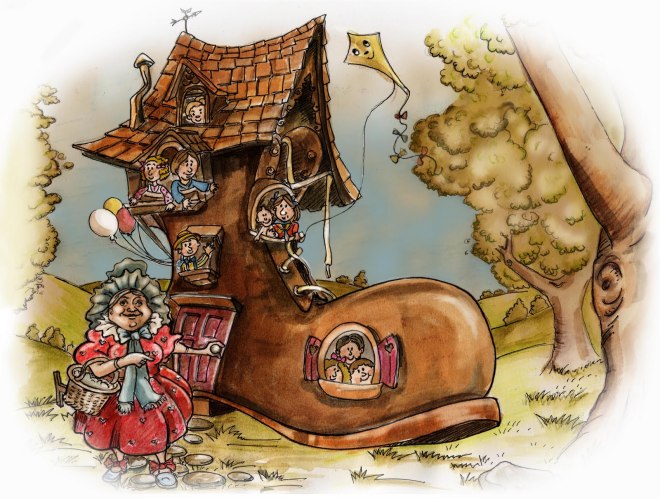
Shoelady For President

Old Lady who lived in a shoe

With the California primary fast approaching and the relentless updates on every primary from Iowa to Indiana, politics dominate the newscasts. Debates, debacles and debasements abound every night on the broadcast news and the talking head shows. Scrutiny, scorn and scurrilous scalawags seem to be the atmosphere in the campaigns of many, if not all.

I’m really dismayed over the lack of quality candidates. So, I think, the Shoelady should throw her helmet in the ring. I am reluctant because  politics is painfully slow. To get anything done of any significance takes decades, and I am an unrepentant hare who moves too fast for Washington or Sacramento or San Mateo or even Pacifica City Hall. But I am willing to give it a try.

As a mom of a mob, where, I’d like to think, we live in a benevolent monarchy, I feel I have the necessary qualifications to run our fiercely divided country. For one I would ensure that we have enough corners in the government buildings to send the folks that are just not getting along. When I moved into a three bedroom house, I was finally sufficiently able to send all ten to corners if need be. I think each member of Congress should have a “corner stipend” with their various other perks.

Second, my elbow room philosophy would become law. The Elbow Room Philosophy essentially means that everyone has their space. Their physical space, of course, in the cherry appointed offices, but also their spiritual and ideological space. The Elbow Room Philosophy is just another name for RESPECT. All branches of government will be mandated to respect each other and their respective opinions. “Can we all just get along?” If not, you may go to your corner. No fighting allowed.

Finally, all members of Congress will have to live within their means. I think each member should clean their own offices, if not for the experience of sympathizing with workers who they may represent. Also, I propose that each member spend some months on Welfare or Social Security as their sole income. I propose they do this in their home bases. Our representatives here in the Bay Area will become acutely aware, quickly, of how difficult it is to live on a fixed income, especially in a geographical area so expensive like San Francisco. I am not asking for more handouts, I want our representatives to know whom they serve.

As a middle child, I have had to broker many armistices in our somewhat tumultuous upbringing, and I have developed an ability to be fair, kind and patient. I think I would make a fine President of the United States. Shoelady for President!!

The Good News According to Erma

Erma-Bombeck-300x225

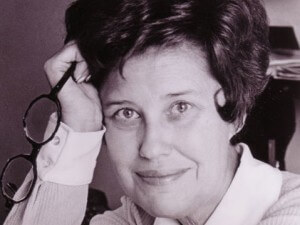
Recently, I wrote a blog post titled “Though Dead, Yet They Speak” marking the twentieth anniversary of the deaths of the Monks of Tibhirine and Henri Nouwen. But there is another person who also had a profound impact on my life like those gentlemen. And through her humor and writing, she spread good news to other women. I forgot about this lady who died twenty years ago yesterday…..in my hometown of San Francisco. And even today, though dead, she still speaks.

The nineties were a blur; from 1990-1999, I had six children. I was actually living the life Erma had been writing about for decades. Nineteen ninety-six was one of the few years of that decade I didn’t have a child. I had one at the end of 1995 and would have another in the summer of 1997. I had two in the eighties and two more in the first decade of the 21st Century. A total of ten. I would’ve engraved and framed the words Erma would have crafted regarding my chosen lot in life. And yet, that is just what she did throughout her career, craft words and stories that highlighted the life of the American woman, the American mother in particular, and all her cares and responsibilities. Women, who felt invisible doing all that needed to be done to maintain their homes, could turn to Erma and laugh as if they were sitting at their kitchen table with a good friend. That good news produced laughter, encouragement and perseverance. Definitely good news for the weary woman.

Perhaps I couldn’t have grouped her with the monks and Brother Nouwen anyway because their content and their lives were definitely different than Erma’s. So it seems. The monks by their lives’ and Henri by his writings changed my life spiritually. But Erma packed a spiritual punch in many of her writings as well, and it behooves us to remember and admire how she wove great truths into her writings.

Of course, we all remember her essay “When God Created Mothers”.  She loosely translates the Genesis record and she nails it on the head as she describes the mystery of motherhood and its incalculable worth. She wraps up the essay with the sublime:

Finally the angel bent over and rang her finger across the cheek.

“There’s a leak,” she pronounced, “I told You that You were trying to put too much into this model.”

“It’s not a leak,” said the Lord, “It’s a tear.”

“What’s it for?”

“It’s for joy, sadness, disappointment, pain, loneliness, and pride.”

“You are a genius,” said the angel.

Somberly, God said, “I didn’t put it there.”

Her words were not just for the mother, “the one who was overkidsed, underpatienced, with four years of college and chapped hands all year around,” but for any woman. Many of her writings were for women in general, and for older women in particular. And for the woman who looked in the mirror and thought it was too late for her, she wrote these gospel-like words:

For years, you’ve watched everyone else do it….And you envied them and said, “Maybe next year I’ll go back to school.” And the years went by and this morning you looked into the mirror and said, “You blew it. You’re too old to pick it up and start a new career.” This column is for you.

Margaret Mitchell won her first Pulitzer Prize for Gone With the Wind in 1937. She was thirty-seven years old at the time.Sen. Margaret Chase Smith was elected to the Senate for the first time in 1948 at the age of fifty-one.Ruth Gordon picked up her first Oscar in 1968 for Rosemary’s Baby. She was seventy-two years old.Billie Jean King took the battle of women’s worth to a tennis court in Houston’s Astrodome to outplay Bobby Riggs. She was thirty-one years of age.

Grandma Moses began a painting career at the age of seventy-six.

Anne Morrow Lindbergh followed in the shadow of her husband until she began to question the meaning of her own existence. She published her thoughts in A Gift from the Sea in 1955, in her forty-ninth year.Shirley Temple Black was named Ambassador to Ghana at the age of forty-seven.Golda Meir was elected Prime Minister of Israel. She had just passed her seventy-first birthday.

You can tell yourself these people started out as exceptional. You can tell yourself they had influence before they started. You can tell yourself the conditions under which they achieved were different from yours.

Or you can be like the woman I knew who sat at her kitchen window year after year and watched everyone else do it. Then one day she said, “I do not feel fulfilled cleaning chrome faucets with a toothbrush. It’s my turn.”

I was thirty-seven years old at the time.

She preached that we can have a second act, or a third act; shoot, some of us can have sequels.

In 2007, more than ten years after she died, the year my first column was printed, I was forty-eight years old at the time. Act II.


Golden Season

Golden

Well, how about that game last night? After the slugfest with the Spurs last weekend, I’m certainly glad for the easy street win to 73. Thank you for the anti-climactic, history-making game, and the kind reprieve to my stomach because I wasn’t prepared with an adequate supplies of Tums. I did get worried when Steph took one too many tumbles, but the game was as good as it gets. Oh, yeah, 402 three’s….that was a nice touch.

Then, I was a little miffed when my “authentic fans” switched from the Warriors game to Kobe’s Swan Song and oooo’ed and aaahhh’ed over the delighted boyish faces of Hov, Snoop, Kanye, George and Jack as Kobe hit those last five baskets and propelled the Lakers over the Jazz. One kid felt like it was a “We are the World” world peace kinda moment. Awwww, isn’t that nice, can we go back to the Warriors’ game please? But, Mom, it’s Kobe! Unless there’s Nutella involved, gimme the remote.

Back to the Bay, and this Golden Season of the Warriors. As I have said before, I was fortunate to witness history when the Niners dominated the gridiron back in the ‘80’s. Their 1984 season wins of 15-1 broke the Miami Dolphins’ record of 14 regular season wins, even though the Dolphin undefeated season record still stands. Watching the Niners back then, I knew I was watching history being made. I was watching a new phenomenon of the game, an excellence that hadn’t been seen before, “a thing of beauty” on the football field.

Even though I am a basketball bandwagoneer, I admit it, and I confess I don’t like basketball as much I like football, but I can’t help but express profound admiration for a team whose playing surpasses the best that had ever been played. Excellence, beauty, art, wherever they are manifested, should be highlighted and appreciated. I appreciate this Warriors squad not just because they’re winning, but they’re winning with grace and style, with beauty and artistry. This team has excited many who confess not to be “authentic fans”, many who quit watching basketball for whatever reasons, many who never watched the sport to begin with because of their recipe of incredible ball handling, team interaction, joy in playing and, of course, a little dash of Curry.

Excellence is as good as gold, and the Golden State Warriors certainly delivered a golden season to the Bay – to the world – this year. Now, excuse me while I run to Costco to bulk-buy some Tums and Pepto-Bismol because these playoffs are gonna be killers. 🙂

Photo by Coseezy Strachan – @kicknit

Curry shoes


Though Dead, Yet They Speak

Trappist Martyrs of Tibhirine-1996

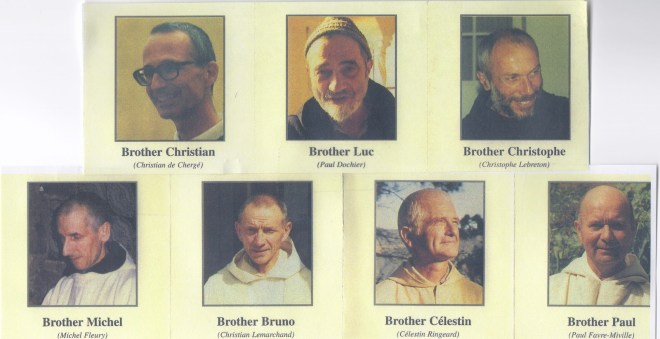
This May marks the twentieth anniversary of the deaths of the monks of Tibhirine, and this September marks the same anniversary of the death of Henri Nouwen. Twenty years ago, on the very day of the monks’ abduction in Algeria, March 27th – my birthday – I was sleeping in the Hotel Palatine on the Via Cavour in Rome. Little did I know that sometime in the future their lives would intersect with mine in the most profound manner.

Through John Kiser’s The Monks of Tibhirine: Faith, Love and Terror in Algeria and Xavier Beauvois’ exquisite film Des hommes et des dieux (Of Gods and Men), these brothers in the Lord, though dead, yet they still speak.  I don’t remember when I first heard about my brother, Henri Nouwen; but for the past few years, through his writings, though dead, he still speaks, he speaks to me wonderful Christian truths. What did…what do these men have to say even now?

All seven of the Trappist monks killed in 1996 were French. They were: Christian, Luc, Christophe, Michel, Bruno, Célestin and Paul. These brothers – my brothers in Christ – lived and ministered to the townspeople of Tibhirine in the Atlas Mountains of Algeria. Ministered to a people and country they loved. Caught in the clutches of a brutal civil war, they were killed; and, ironically, to this day, their murderers are unknown.

Often in my life, I come across a piece of art whether it is a song, film, book or even painting that mysteriously resonates deeply within my being. That is what happened when I viewed “Of Gods and Men” in 2012. This film tells the story of Christian and his fellow  monks in Tibhirine while incorporating all that is beautiful in the Catholic Church. The simple liturgy, the acapella worship, the spiritual academia and the rich art history. Never has a movie so holistically moved me.

That they were kidnapped on my birthday while I was in Rome seemed to underscore this connection. I am bonded to these brothers because of their story, but also because of their Christian lives and how they lived the gospel in true simplicity and anonymity. One of the many things these brothers speak about even now is forgiveness.

Knowing his murder was a possibility, Brother Christian penned a testament, a manifesto of his heart. Even though dead, he still speaks to us today about forgiveness and love. He wrote:

Obviously, my death will appear to confirm
those who hastily judged me naïve or idealistic:
“Let him tell us now what he thinks of his ideals!”
But these persons should know that finally my most avid curiosity will be set free.
This is what I shall be able to do, God willing:
immerse my gaze in that of the Father
to contemplate with him His children of Islam
just as He sees them, all shining with the glory of Christ,
the fruit of His Passion, filled with the Gift of the Spirit
whose secret joy will always be to establish communion
and restore the likeness, playing with the differences.
For this life lost, totally mine and totally theirs,
I thank God, who seems to have willed it entirely
for the sake of that JOY in everything and in spite of everything.
In this THANK YOU, which is said for everything in my life from now on,
I certainly include you, friends of yesterday and today,
and you, my friends of this place,
along with my mother and father, my sisters and brothers and their families,
You are the hundredfold granted as was promised!
And also you, my last-minute friend, who will not have known what you were doing:
Yes, I want this THANK YOU and this GOODBYE to be a “GOD-BLESS” for you, too,
because in God’s face I see yours.
may we meet again as happy thieves in Paradise, if it please God, the Father of us both.

Because of these wonderful, most Christ-like lives, I will pray for Algeria for the rest of my life for my brothers’ sake, I will pray for the love and peace of God to come to this country they loved.  THIS is Christianity. Greater love hath no man than this, that a man lay down his life for his friends, and that is just what my brothers did for their friends in Algeria. This, my friends, is a modern example of walking “in His steps”. I am not glorifying their deaths, I am glorifying their lives.

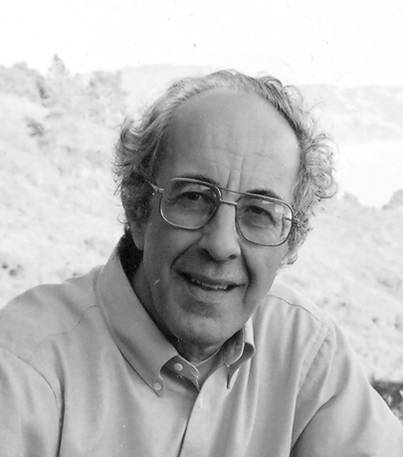
Another brother, Henri Nouwen, was a priest, scholar, speaker, famous writer and theologian. He left a distinguished career as a teacher and writer to spend time with the handicapped adults at L’Arche in Canada. From there, he says, he learned his greatest lessons.

I first read his book, Reaching Out: The Three Movements of the Spiritual Life, then The Return of the Prodigal Son. Both of these books, like Of Gods and Men, touched me deeply in my wounded soul. Before I read Reaching Out, I was independently thinking of getting from loneliness to solitude. As I contemplated this idea, two books serendipitously came to me that touched on this very subject, Paul Tillich’s The Courage to Be and Nouwen’s Reaching Out. In Reaching Out, Nouwen still speaks:

To live a spiritual life we must first find the courage to enter into the desert of our loneliness and to change it by gentle and persistent efforts into a garden of solitude. The movement from loneliness to solitude, however, is the beginning of any spiritual life because it is the movement from the restless senses to the restful spirit, from the outward-reaching cravings to the inward-reaching search, from the fearful clinging to the fearless play.

Henri lived the last ten years of his life at L’Arche Daybreak community in Richmond Hill, Ontario, Canada. He is buried there.  In his book, Finding My Way Home, there are four essays: The Path of Power, The Path of Peace, The Path of Waiting and The Path of Living and Dying. In The Path to Peace,  Henri writes about his experiences caring for a young completely handicapped man named Adam. Adam was entirely dependent on the support staff at L’Arche, but despite his disability, Henri said of Adam “the longer I stayed with Adam, the more clearly I recognized him as my gentle teacher, teaching me what no book, school or professor could have ever taught me.” Henri asked Adam’s parents,

“Tell me, during all the years you had Adam in your home, what did he give you?” His father smiled and said without a moment of hesitation: “He brought peace…he is our peacemaker…our son of peace.”

Henri continued, “The gift of peace hidden in Adam’s utter weakness is a gift not of the world, but certainly for the world.” From his experiences with Adam and at L’Arche, though dead, yet he still speaks.

I must touch briefly on The Path of Waiting as this is a place I am familiar with. Loneliness and waiting, waiting for things to happen, things to progress, things to get better. In Reaching Out, my brother taught me how to progress from loneliness to solitude. And in The Path of Waiting, he taught me how to wait.

To wait with openness and trust is an enormously radical attitude toward life. It is choosing to hope that something is happening for us that is far beyond our own imaginings. It is giving up control over the future and letting God define our life. It is living with the conviction that God molds us in love, holds us in tenderness, and moves us away from the sources of our fear.

Our spiritual life is a life in which we wait, actively present in the moment, expecting that new things will happen to us, new things that are far beyond our own imagination and prediction. This, indeed, is a very radical stance toward life in a world preoccupied with control.

I am indebted to these brothers for the lives they lived and the insights they’ve shared. They embraced their faith and brought their talents, struggles and humanity to that faith. I look forward to being “happy thieves in Paradise” with them.

Though dead, yet how profoundly they continue to speak.

Christian’s Full Testament
nouwen


Dial Up for a Day

aol4

First published in Pacifica Patch November 9, 2011

Recently, I had the excruciating experience of using the Internet via a dial-up connection. You may be wondering, “Do people still use dial-up?” or if you are of a younger generation, “What the heck is dial-up?” Yes, some folks still use dial-up, and I had the rare (thank heaven) opportunity to revisit that delightful, primitive means of accessing the web. You younger folks, just Google it if you want to know.

Remember back in the “You’ve Got Mail” days when Meg Ryan waited excitedly through the prolonged, grainy phone connections to get to her email? Remember those days when you were just thrilled to have Internet, and to have this whole world of information at your fingertips? I remember, in 2001, when our family first got online.  I was so eager to find information on old books that I had read and be reunited with these treasures from the past.  Oh, and music? Before YouTube and iTunes, there was Napster, Limewire came later, and people had their own music sites like Joe’s Audio Paradise where you could find those old songs that you grew up with. I loved going to that site and showing the kids my music.

Well, things have certainly changed. We have DSL, high-speed and other versions of really fast Internet that I can’t even identify, let alone afford. As I waited for the little AOL three-step progression, I cheered with the AOL crowd when I finally got online.  The benefits of this experience are not to be dismissed though. While I waited for my Facebook to load, I got my Master’s thesis completed. While I waited for Yahoo to access my mail, I caught the first half of “Gone with the Wind” and finally by the time I finished a mild job search on Craigslist, I was old enough for retirement.

I have to admit; I found this experience rather painful. I didn’t realize how accustomed I had become to instantaneous Internet. Are we so addicted to moving at the twinkling of an eye that we get bent out of shape if the Internet goes out or if, heaven forbid, the electricity goes out? I was waiting in the grocery store line and was getting a little anxious that the checker was going too slow. Geez! Maybe those serendipitous moments of pause are gifts to get us to downshift a bit, take a deep breath and even look a little longer at the children who will be grown before you know it because they do grow at high speed.

So, despite the frustration on my dial-up day, I learned a valuable lesson in patience and gained an understanding that I may not want all things at high-speed. I hardly remember when my older kids were young, so I will keep a dial-up mentality and spend time enjoying the little ones while they are young.

Random Words of Kindness

Kindness

Originally printed in February 2011

Valentine’s Day is Sunday. Isn’t that a great holiday? A holiday dedicated to showing our loved ones how much they mean to us. We have St. Valentine, an early Christian martyr, to thank for it. His letter to a young girl, before he was executed, is one of the alleged origins of this day. Valentine’s Day, now, for the most part, is a lovers’ day.

That’s nice, if you have a partner. The point of this column, though, is not lovers’ love, but friend love, family love, or just general love. Love expressed in kind words.

Years ago, I used to attend a little prayer meeting with some other parents from the school my kids were attending at the time. I couldn’t make it to one of the meetings and had texted my friend telling her why I couldn’t make it. She texted back, “OK, sweetness.” Wow, I thought at the time, isn’t that nice! I texted her back and told her I love it when she talks like that.

Another instance around the same time, at the Canned Food Store in Redwood City, we were waiting in line, and a clerk opened up her window, and said to me, “I can take you over here, honey.” I just lit up. I love when folks talk to me like that. Don’t you?

I love these terms of endearment; but unfortunately, I don’t use them as often as I should.

My friend, the store clerk and many others I come in contact with are steeped in this kind of kindness, and not only are their words dripping with this divine quality, but so are their mannerisms and their countenances. I have another friend who is the epitome of optimism and joy. I can’t comment on anything on Facebook or say anything that she doesn’t give me a positive and joyful response. I adore this characteristic, and this friend.

Unfortunately, growing up, these expressions didn’t flow readily. My ability to use these delightful demonstrations of affection is somewhat underdeveloped. I grew up in a household where profanity was the vernacular and “survival of the fittest” was the motto. No meek shall inherit the earth, no turning the other cheek or any other teaching from CCD. Sweet nothings were as foreign a language as Uzbek and crying was anathema. When my dad first read this column, he indignantly argued, “That’s bullshit.” He didn’t read many of columns afterwards.

So one of my Valentine’s Day resolutions will be to be more affectionate with my kids, my family and my friends, even to be affectionate and kind to some of the scurrilous among us. Now, this is hard and uncomfortable because I’m not use to it, but I’ll try.

For my friends, the store clerk and the others I have met, their random words of kindness come spontaneously from within. For me, for a time, I must practice deliberate words of kindness and hope that this habit will become spontaneous too.

Remember, according to a Chinese proverb: “a bit of fragrance always clings to the hand that gives roses.” Aw, sweetness!

P.S. Thank yo, Eloisa!


Where Do They Go?

shoots-in-snow

“Where does the winter go after the snow?” I asked my mom as winter faded one year.

“Well, maybe God rolls winter up like a giant quilt and stores it in his attic.” My mom answered with a smile. “What do you think of that?”

“I don’t think so, Mom.” I laughed.

“I don’t think so either,” she said, “I suppose winter just goes right into spring like Thanksgiving goes right into Christmas.”

The daffodils blossomed like a chorus, waving in the wind. We picked as many as we could before their leaves curled up and died.

“Mom, where do the daffodils go when they die?”

“The daffodils never die, they just wake up for a short time and brightly wave to us, and then go back to sleep until next winter.”

That spring, we planted a garden. We planted cucumbers and carrots, corn and pumpkins, tomatoes and peppers. As spring marched into summer, we spent a lot of time in the garden, we mulched, we weeded and we got rid of a lot of bugs.

By mid-summer, many of the fruit were ready to pick. We filled our baskets with delicious green cucumbers, light green clad ears of corn, red juicy tomatoes and snappy orange carrots. We had to wait until fall for those slow growing pumpkins.

After the harvest, the plants remained for a time, they look lost and lonely without their precious fruit, and they eventually withered and died. The cucumber vines slowly slipped from the fence, the pumpkin vines shrunk and died, the corn stalks drooped and dropped to the ground.

“Where do the plants go after they die?” I asked Mom at the beginning of fall. Mom, who had been away, answered without looking at me, “I suppose God buries them in the ground where they wait for the next spring.” There was a sadness in her voice like the sadness in our lifeless garden.

Fall descended like the leaves from the trees. The trees seemed to be weeping sensing the sadness that had filled my house. My dad and I raked the leaves while Mom was away. “Dad,” I asked, “where do the leaves go after the fall?”

“We rake them up and put them in the compost pile for the mulch for next year’s garden.” He said matter-of-factly.

Fall flew past like the wind. And with winter, the garden seemed really dead. The holidays were quiet and sad. I went out to the garden after my grandmother’s funeral. The garden was cold, lifeless, just like how death felt. My mom came out to the garden and asked how I was.

“Mom, where do grandmas go after they die?”

“Oh, baby,” she said with tears rolling down her face, “Grandmas are carried to heaven by their Heavenly Father. And though we won’t see her again here, we will go to where she is later.” She put her arm around my shoulder to lead me back into the house when I noticed something on the frosty ground of the garden. I stooped to clear the dirt and frost. The first shoots of the daffodils were beginning to break through the cold, hard dirt.